
Even before DG MEME was born, I was already deeply concerned about two things: the lack of interest in the European Union, and the amount of bullshit people believe, repeat and spread about it. It saddened me to watch the scum of our political class pretend to have informed opinions on something they had never seriously tried to understand. I mean the Farages, the Johnsons, the Salvinis, the Le Pens: people who only cared about the functioning of the EU when there was EU money to misuse, and who otherwise appeared determined to make the whole thing collapse.
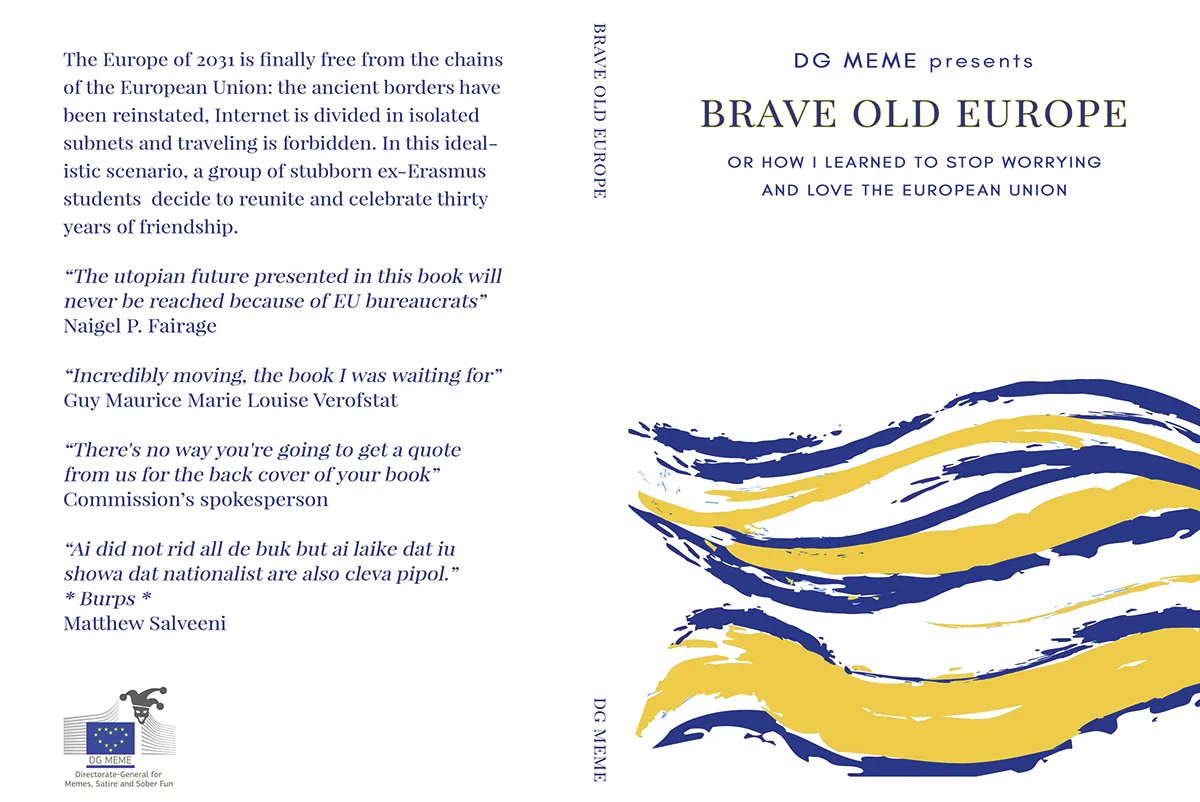
I have little doubt that, sooner or later, they may succeed. Poopulists are evil, voters are dumb naive, and most pro-European politicians are painfully ineffective. They have vested interests of their own, they rarely offer a vision that goes beyond their party line, and their narrative is boring, cautious and politically correct. There are a few exceptions, of course, and I had the pleasure to interview them. Otherwise the landscape is very depressing and it scares me. So I started imagining what Europe might look like a few decades after my Erasmus: borders reinstated, travel forbidden, information controlled, propaganda everywhere. In other words, the right ingredients for a good adventure book.
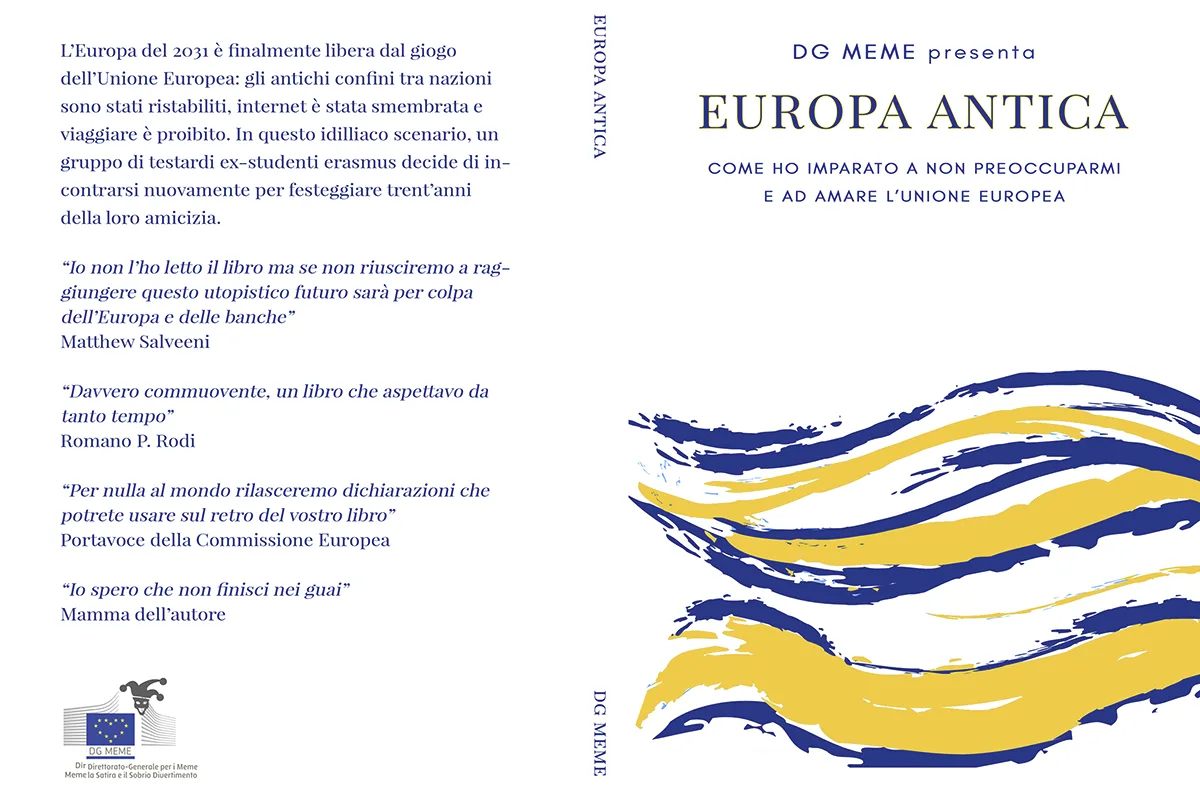
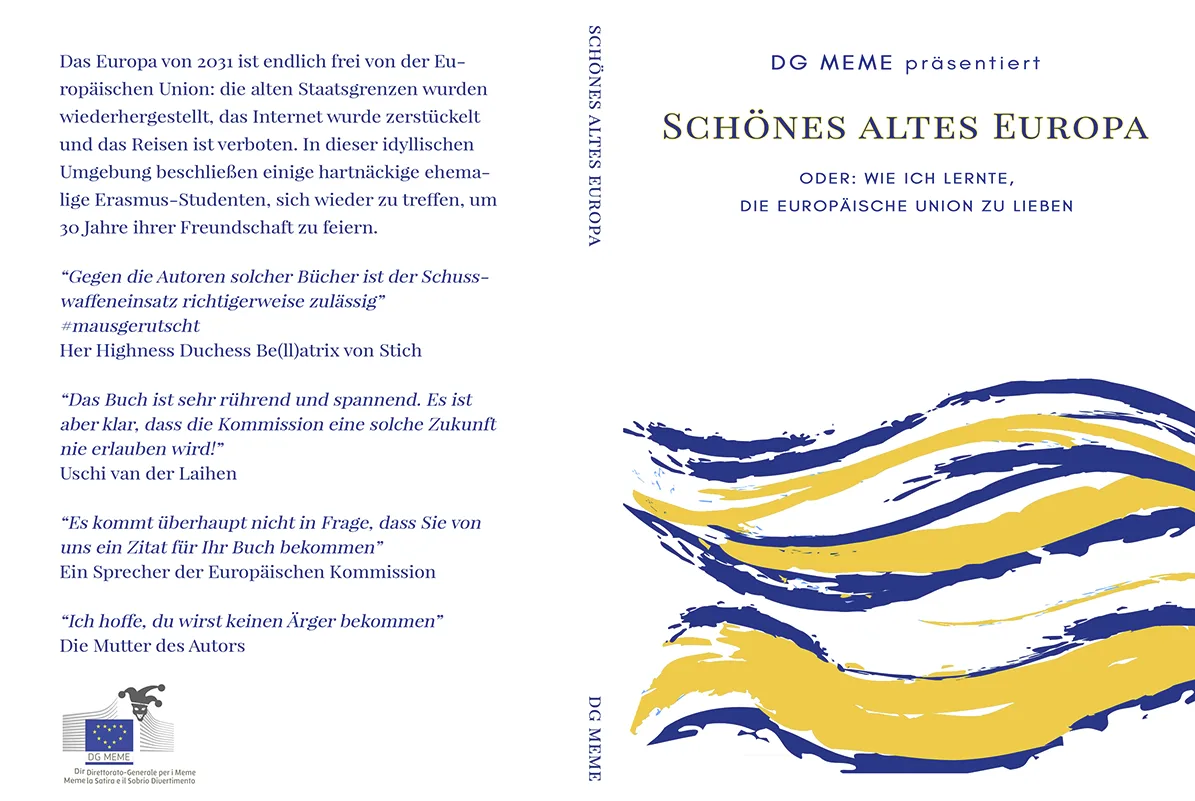
In 2010 I started writing Brave Old Europe, initially titled The Man Who Hated Europe, and I published it in 2015. Later, when I realised I would have to promote it somehow, I thought I should probably go to Brussels, but I was happy and cozy in Innsbruck. Then Brexit happened, and I was so pissed off that I accepted a traineeship at the European Commission. I wanted to see it from the inside, the communication apparatus that had failed so spectacularly to explain itself to the British public.
While I was there, I managed to sell a few copies of the book, which at least allowed me to pay back the (poor) English translation. Very few people actually read it, but it was shown by one high-ranking official or another in a few meetings, as proof that young people cared about the EU. That was not really the point I was trying to make. I wanted to talk about Erasmus as a tool for building a European identity, and about the risk of losing people when institutions communicate in a stale, distant and self-referential way. I chose a dystopian novel because I wanted to show what we risk losing through our narrow-mindedness.
As a trainee, and later as a consultant, I tried to politely suggest alternatives, offer constructive criticism, and recommend a different approach to communication. It was all in vain. Some officials were curious, but hierarchy always killed the ideas in the end; nobody was really ready to risk an almost automatic promotion for this crazy Italian’s ideas. So I sat down and created my own fictional Directorate-General (“fake it until you make it!”) and the amount of followers and the top EU players I managed to meet prove that it worked. Now everybody praises French Response and I am also a big fan. But these are the same ideas I proposed in 2017 and have applied to DG MEME since 2018.
And the book Brave Old Europe is the link that made all this possible. I would probably write it differently today, and maybe some parts are a bit naive, but it still captures my young-adult feelings about the EU, its fragility, and its possible downfall. I hope you enjoy reading it as much as I enjoyed writing it. And no, I cannot send you a copy: it is only available on Amazon, through print on demand. I tried to understand how to sell it through EU-based shops, but the paperwork I was expected to fill in quickly drove me away from the idea.
No, our Union is not perfect. That is exactly why we should focus on solving its problems, instead of destroying it, insulting it, or handing it over to people who never wanted it to work in the first place.